Soavtorji
Opis
The project combines the sound art of Eva Mulej Vrabič (Oka) and the performance art of Tatiana Kocmur.
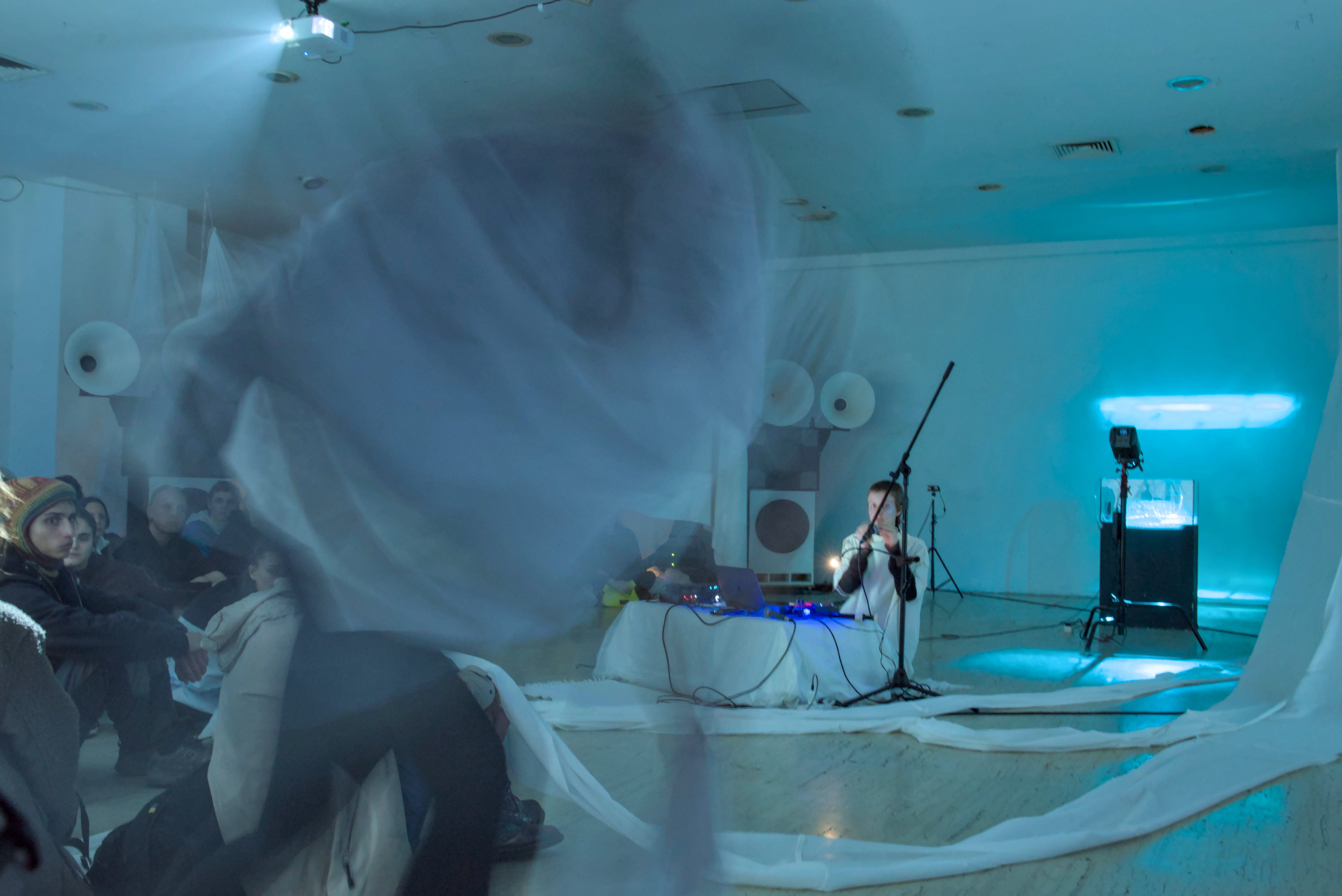
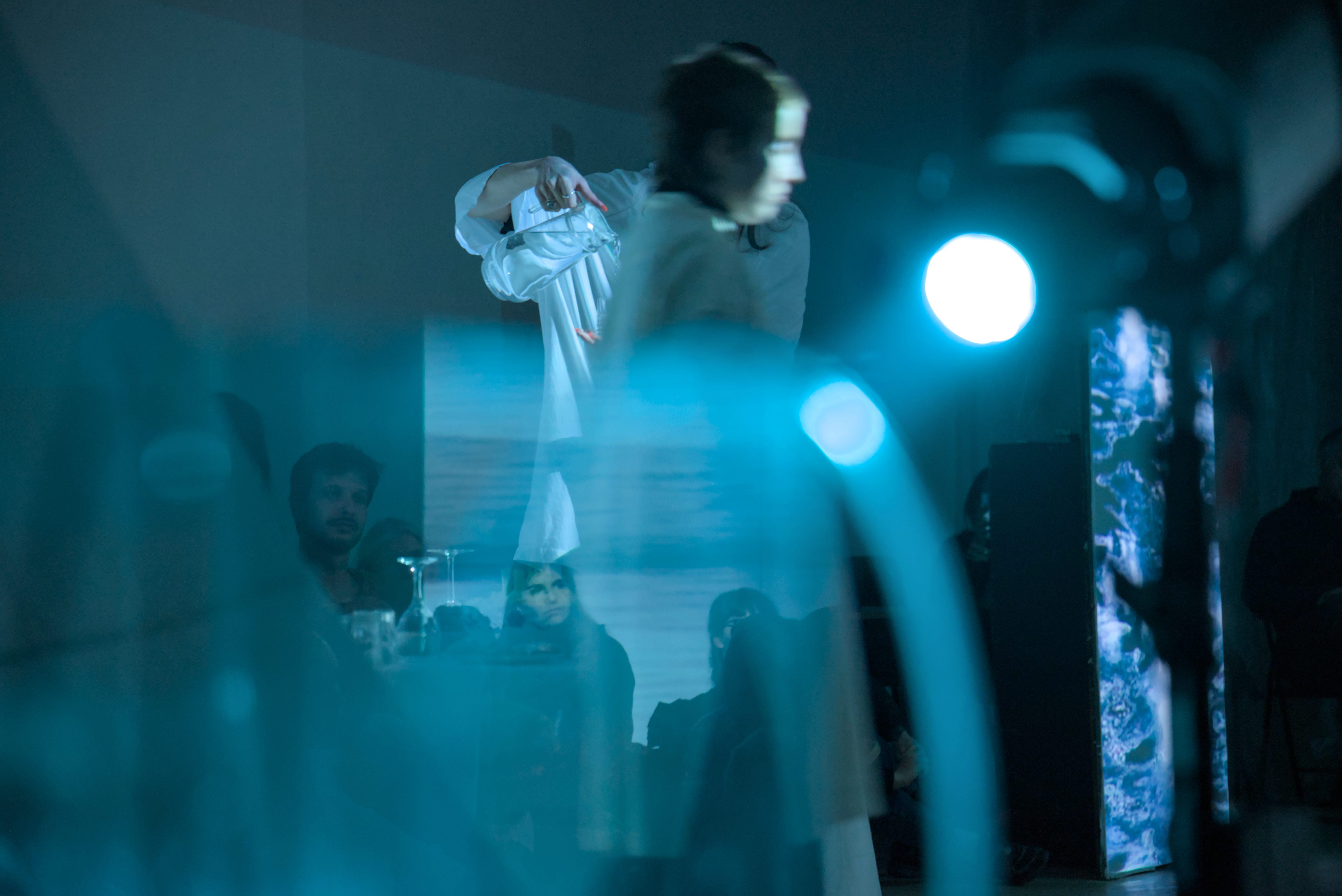
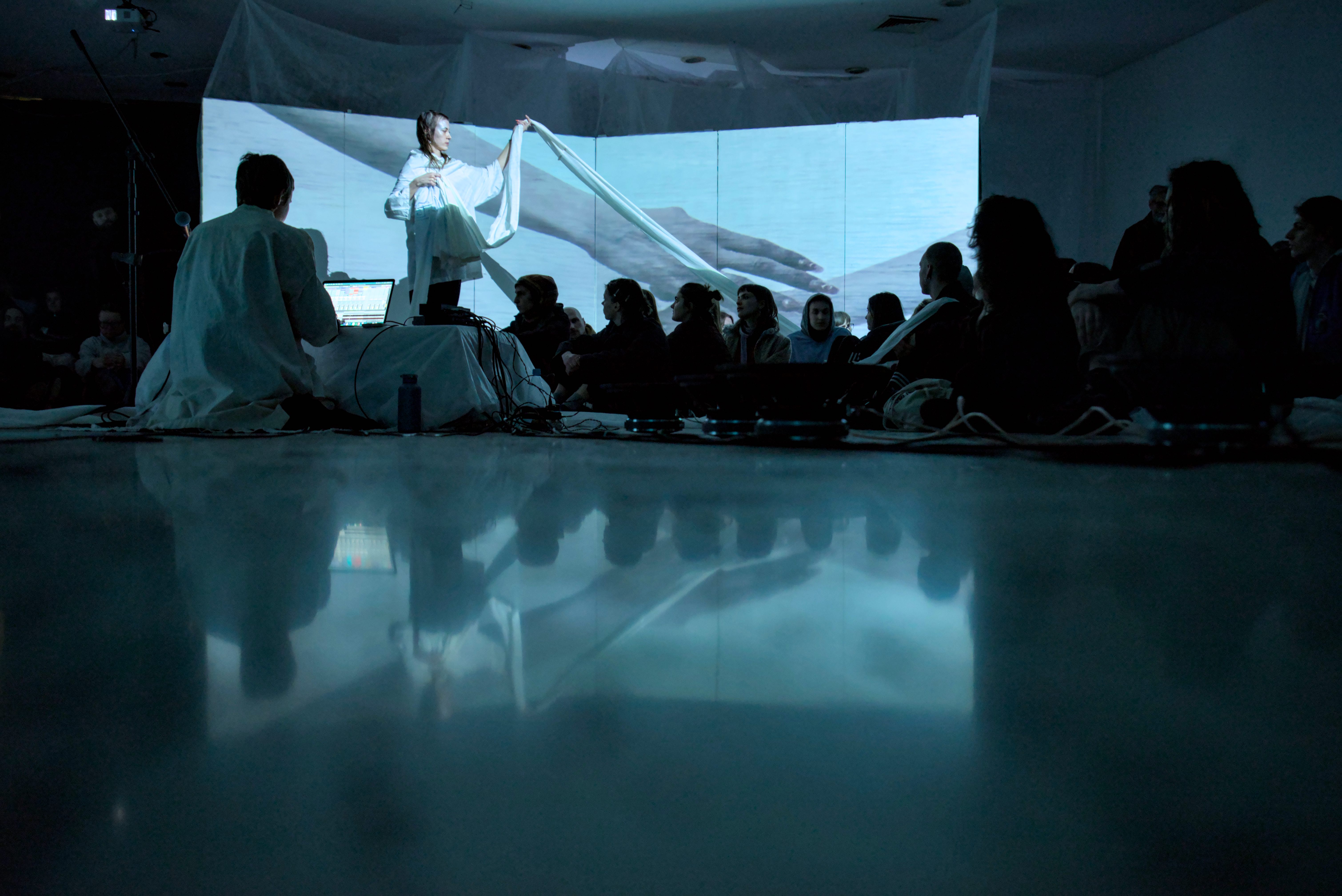
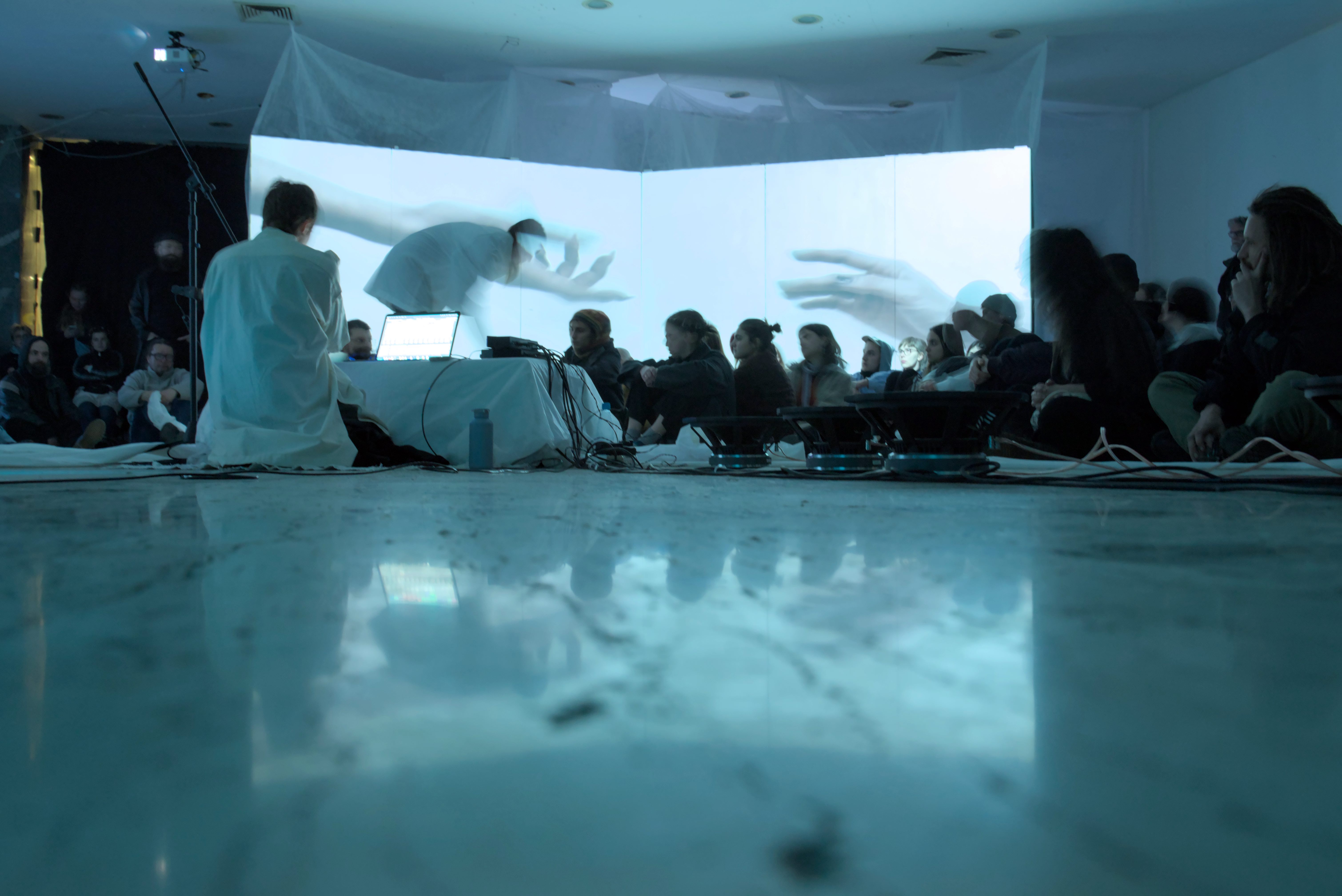
They place the bridge at the center as a symbol of intermediation – a space where media, bodies, modes of perception and levels of existence meet, intertwine and transform into a new (non)form of expression. They understand the bridge as a performative space that is unstable, fluid and open to unforeseen uses. Like sound and physicality, spatiality in performative environments is created on the fly; artists and viewers co-create it with each presence. The project methodology is based on the equal relationship between body, sound and space and their mutual mirroring. The energy field created by autors and spectators can develop a specific, transformative effect.
Contemporary social instabilities dictate the need for new ways of association and community action. Protests, rituals, meetings and decisions take place in physical, digital and virtual spaces – situations in which bodies, with their (non)presence, create a performative space of discourse.
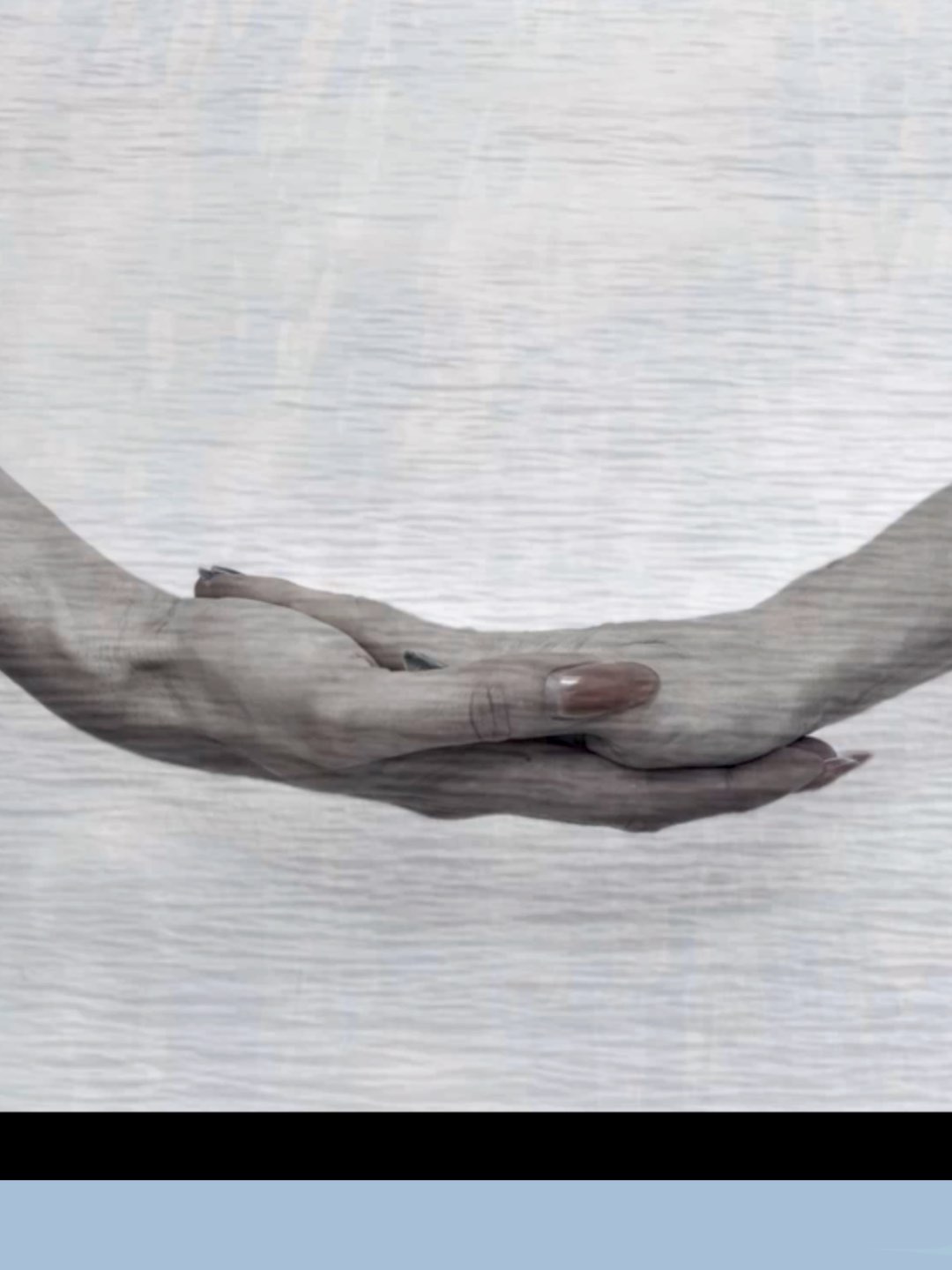
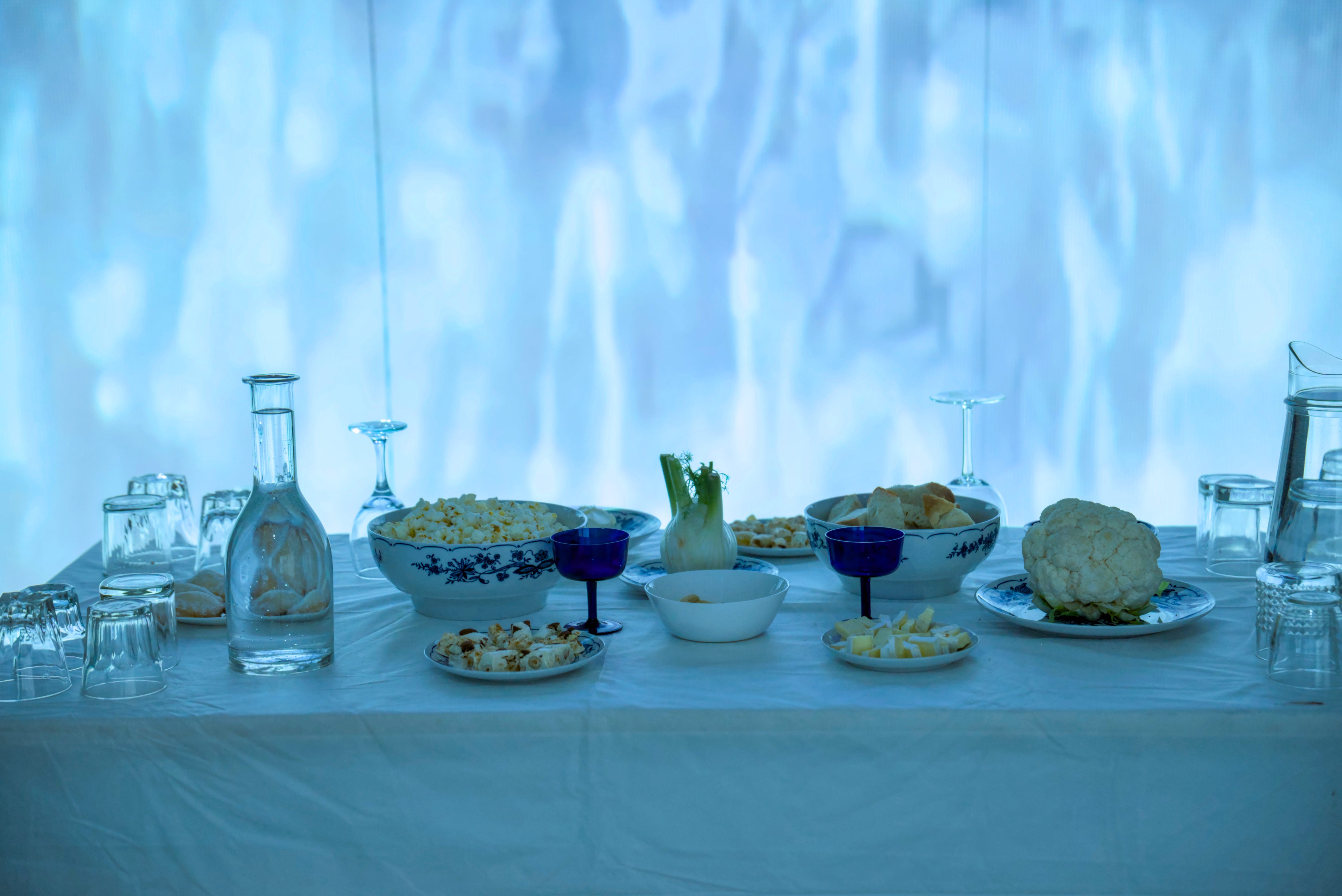
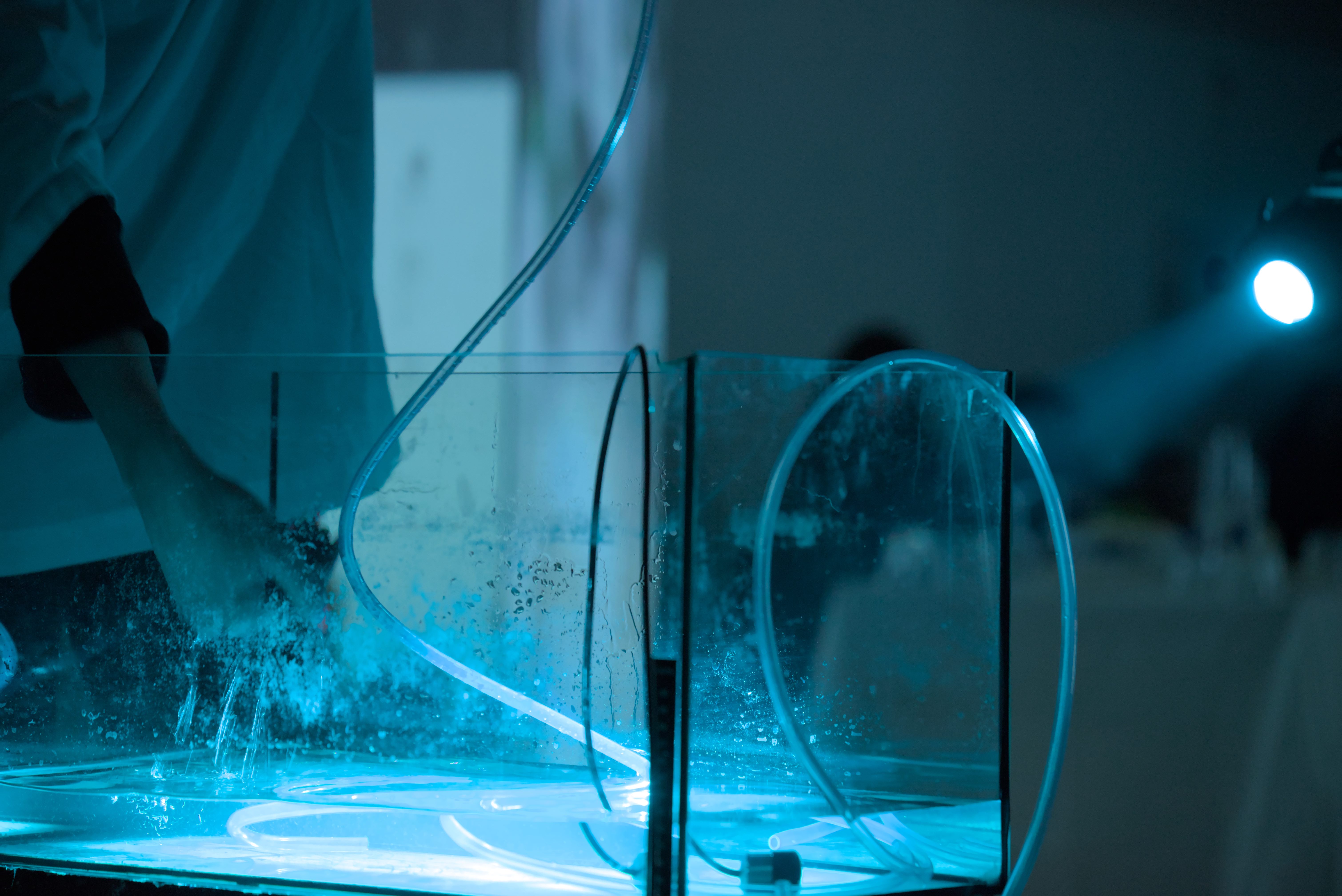
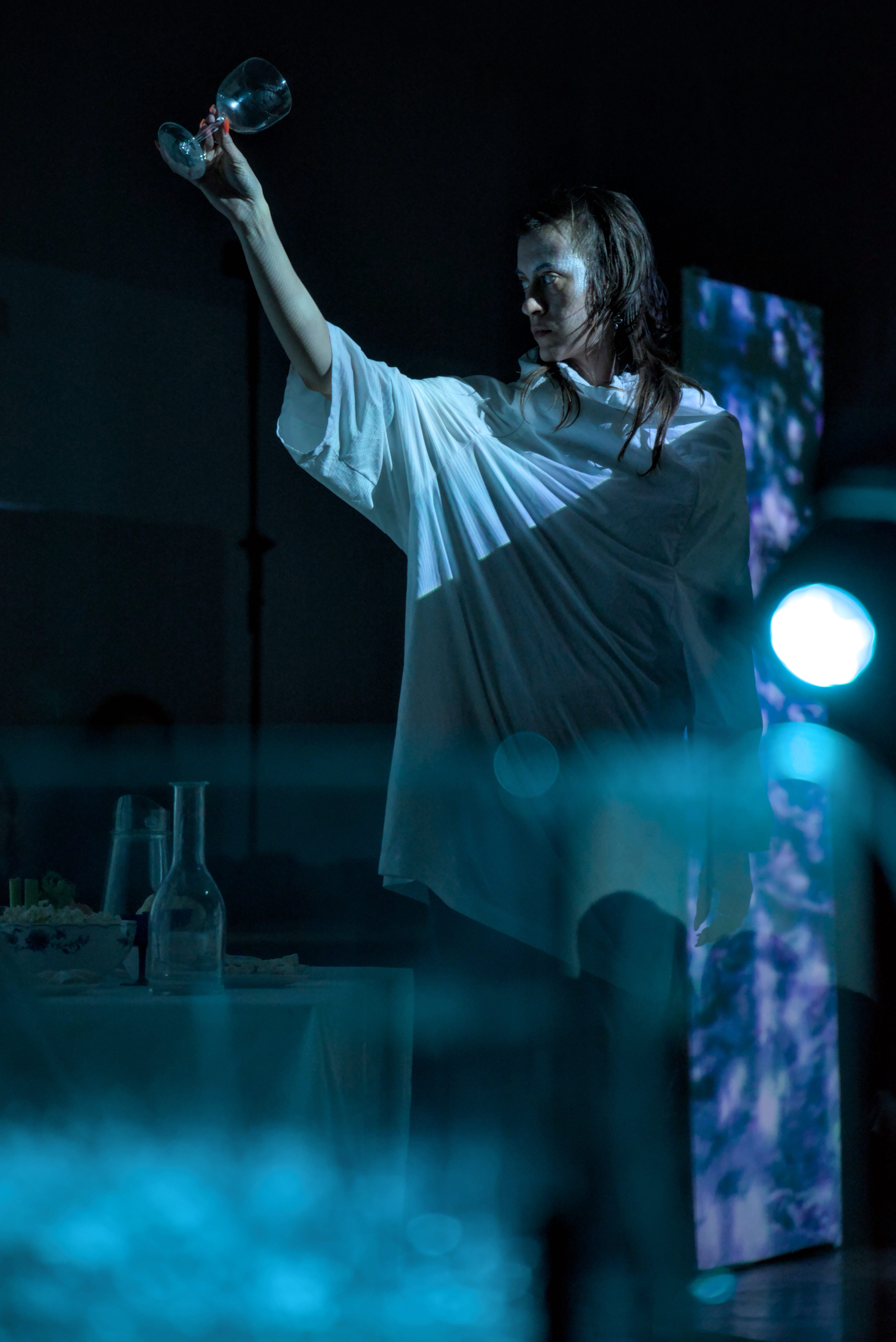
The project is based on the hydrofeminist idea of human as a body of water, an inseparable part of the natural world. Water is a common element of all living beings; it connects the inner workings of human, ecology, art and social criticism and offers a new ontological framework for understanding the present. In this context, water becomes a symbol of connection that breaks down hierarchies based on classification and separation, and opens up different, perhaps even utopian, ways of thinking about the future. Liminal space is chaotic, saturated, permeable and unstable – it does not offer unambiguous answers, but rather conditions for transformation and non-binary thinking and being. The human body as a body of water carries within itself tides, currents and flows of information, sound and nutrients. Body, to body, to body. Exchange becomes possible – a bridge is established.
In their creative process, the artists will devote themselves to the processes of metamorphosis and the search for non-binary existence in the context of understanding human as a body of water, primarily in the sense of discarding stunted forms and creating new states of presence based on relationships and coexistence. They understand non-binary as a way of transcending personal and social fixedness, norms and commandments, and as erasing sharp boundaries between polarities. Metamorphosis reorganizes space and opens up the terrain for the emergence of new, unknown cross-bodies.
They perceive the performative space as an envelope that invites the visitor into an experience of co-becoming: into following the transformations between the artists, between them and the space, and between sound and bodily gesture. The emerging multisensory situation does not build a linear narrative, but establishes an open, processual framework in which the boundaries between media, identities, and ways of being dissolve and reshape.
Sound system Marko Batista
Photos: Gregor Podržaj